weblog.hist.net

Archiv zur Kategorie 'Babelblog'

Digital Historian, Center for History and New Media

The Department of History and Art History at George Mason University (where CHNM is located) has just received approval to hire a tenure track digital historian. We are very excited about this new position, which will be half in the Department teaching digital history courses and half in CHNM working on existing projects and developing new ones for us. If you know anyone who would be interested in applying or who should be interested in applying, please pass the word to them.

If you are interested in applying, you need to go to the GMU online application page and the number for this position is F5343z. Specific questions about the search should be directed to me, since I am the chair of the search committee. A formal advertisement will appear in the usual outlets soon.

The link to the formal posting of the position is now available.

Gulag History

The largest penal system in human history–the Gulag–is fast disappearing from the physical landscape. Of all of the many camps that dotted the maps of the Soviet Union, only Perm 36 survives largely as it was before 1991. The rest of the Gulag complex has been torn down, scavenged for scrap metal and building materials, or left to decay in isolated regions of Siberia now accessible only by helicopter.

The Center for History and New Media at George Mason University, the Gulag Museum at Perm 36, and the International Memorial Society have collaborated on a new new website: Gulag: Many Days, Many Lives.

This project explores the history of the Soviet Gulag through bilingual exhibits (English and Russian), an archive of primary sources, a series of podcasts, and other resources. Exhibits are presented with a thematic approach that illustrates the diversity of the Gulag experience through original mini-documentaries, images, and the words of individual prisoners. A searchable archive includes archival documents, photographs, paintings, drawings, and oral histories that give visitors the opportunity to explore the subject in much greater depth. Later this summer, Many Days, Many Lives will also feature a virtual visit to the Gulag Museum at Perm 36.

The usability for historical educational resources

Some time ago we at Historia i Media have described two new polish historical internet projects: A Commonwealth of Diverse Cultures and the online version of Museum of the Warsaw Uprising. These two initiatives can have a very strong impact for the nextcomming big historical presentations in polish internet by showing how to use new multimedia technologies in the case of history.

Interfaces of both described here projects are developed on the Macromedia Flash technology. It gives a wide range of possibilities in showing interactive animations, sound, video etc. But it has also some big faults – for our interests most important one would be a case of usability in the context of the educational reasons.

For the Commonwealth of Diverse Cultures, this problem has a smaller importance. This project tend to be more some kind of historical internet showcase than an educational resource, how it is in the second case with online version of the Museum of Warsaw Uprising.

Virtual museum offers lot of digitalized documents, photos and exhibits. They can be used during historical lessons. But how? Because of the flash technology, nobody can add a link to the concrete subpage with one resource. Making the homework, pupil can’t put any unique reference to the material – so how it can be used in a text?

It is important to everytime ask a question if the historical resources published online should be more attractive or more effective. Example of the United States Holocaust Memorial Museum shows the different way of presenting big internet collections, where there are no problems with references to the concrete materials and subpages. Usability and accessibility has more importance that the attractiveness of interface.

Check also: Case study: Headline History – accessibility and Flash

Berne se munit d’un centre pour les fonds anciens


Depuis le premier janvier de cette année, la Bibliothèque universitaire de Berne dispose d’un nouveau centre de compétence pour les collections anciennes, le Zentrum historische Bestände. C’est un des résultats de la profonde réorganisation du paysage des bibliothèques académiques de Berne et la conséquence d’une longue histoire qui implique aussi la Bibliothèque de la Bourgeoisie de Berne, propriétaire des fonds anciens. Le nouveau centre gère 260 000 imprimés et cartes, entre autres 7000 imprimés issus de la collection de l’humaniste huguenot Jacques Bongars (1554-1612) et les quelque 16 000 cartes, plans et vues géographiques de l’homme d’état bernois Johann Friedrich Ryhiner (1732-1803). Tandis que la collection de cartes a été cataloguée il y a dix ans et est accessible par Internet il en va pas de même pour les livres. Mais le recataloguage de l’ensemble du fonds ancien (des ouvrages datant de 1470 à 1900) et la mise à disposition en ligne de ce catalogue figure parmi les objectifs principaux du nouveau centre. De plus il est prévu de numériser une sélection de livres et de les mettre en ligne dans le cadre du projet e-rara.ch. Reste à savoir quels seront les ouvrages choisies et à espérer que les besoins de la gent historique seront considérées. Affaire à suivre…

Find paths to the digital history news

babelblog

Feeds is our new tiny tool for all RSS-readers interested in topics of digital history. In this project hundreds of RSS sources from digital history blogs is being put into one feed after the appropriate selection (we want to show most interesting news and resources). Using the base of RSS sources and functionality of Google Reader we can show daily at least several interesting news, resources and discussion related to the topics of digital history. Also a special widget with the latest news can be put on the one’s site.

feeds2.jpg

Of course all copyrights of the content provided by the project feed belong to the original authors. Feed is only a medium to share information about the sources of the content. We do not even publish it on the project site – it is available by RSS channel (powered by Feedburner) or by the widget (Widgetbox).

The mechanism of the aggregation is a part of Google Reader functionality. The database of sources is built by Historia i Media team. Now Feeds channel is available via twitter and Facebook. You can search throught its content using Yahoo Pipes.

On the second stage of the project development we want to work with the RSS sources and prepare a tool for social aggregation and evaluation of the most active and valuable news, which would be dynamically added to the main feed. This project was made in a few hours so please do not hesitate to comment it or suggest any modifications. Please visit a project homepage: feeds.historiaimedia.org/

Nebraska Digital Workshop

babelblog

The Center for Digital Research in the Humanities at the University of Nebraska-Lincoln has announced their third annual workshop for early career digital humanists. The goal of the workshop is to bring advanced graduate students, postdoctoral fellows, and pre-tenure faculty members together with senior scholars in a collaborative environment. All those chosen for the workshop will present their work for critique by the participants and will emerge from the workshop with a more refined project, new ideas about their work, and suggestions pathways toward further funding, publication, or other means of advancing their work.

The workshop pays the cost of travel and lodging for all participants as well as an honorarium for presenting their work.

When media re-construct memory – Omer Fast’s Spielberg’s List

babelblog

In Warsaw CSW nowadays can be seen an exhibition titled History Will Repeat Itself by Inke Arns. Its topics were nice described in this two notes of the great art blog We Make Money Not Art, so there is no need to do it again here. But it is worth to concentrate particularly on one of the presentations referring to the issue of media as a way of history re-enactment.

bb56gdf4ejdll3dl3.jpg

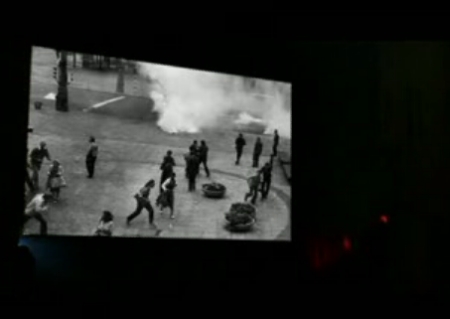
Spielberg’s List is a movie project by Omer Fast. His work – two channel video constructed around the experiences of Polish extras that participated in Steven Sielberg’s shooting of famous Schindler’s List – shows how easily media and entertainment can re-construct memory.
(weiterlesen …)

MATARKA és egyéb hasznos cucc

babelblog

Miután ma a harmadik hivatalos svájci nyelv, az olasz, a mi babelbogunkban szóhoz jutot, gondolom itt az ideje, hogy a magyar nyely is jelen legyen nálunk. Sajnos nem sikerült magyarnyelvü kollegát találnunk, akinek kedve és ideje lenne, a babelblogban idöként valami apróságot írni, ezért én írok egy pár sort.

Napokban a H-Net keretében müködö Habsburg-listán fen ált a kérdés, hogy melyik magyar történészettudományos folyóirat fontos és hogy mi található a hálózaton.
(weiterlesen …)

Strumenti collaborativi e scrittura storica

babelblog

Desidero innanzitutto esprimere il mio apprezzamento per l’iniziativa di Peter Haber e Jan Hodel, che con l’apertura di Babelblog hanno inaugurato una strada nuova e originale per il dibattito sulle applicazioni degli studi storici al web.

L’occasione di questo mio intervento deriva dal workshop “Strumenti collaborativi e scrittura storica nella fase del web 2.0”, che alcuni giorni fa si è tenuto presso il Dipartimento di Studi storici e geografici dell’Università di Firenze con il coordinamento mio e di Andrea Zorzi, con cui da anni divido impegno e fatica per mantenere aperto un canale di discussione su tematiche che riteniamo sempre più importanti per il lavoro (didattica e ricerca) degli storici.

(weiterlesen …)

Babelblog: ein erster Rückblick / a first review

babelblog

Vor zwei Monaten starteten wir den Versuch “babelblog”: Wir öffneten unseren Weblog einer international zusammengestellten Gruppe von Historiker/innen, die aus ihrer Perspektive über die Geschichtswissenschaften im digitalen Zeitalter berichten sollten. Nach zwei Monaten und acht Einträgen von drei Autoren wollen wir einen ersten Rückblick halten.

Mills Kelly berichtete von einem Projekt, das die Entwicklung von Hilfsmitteln zur Erschliessung grosser Textmengen von historischem Interesse zum Ziel hat, vom Versuch der Library of Congress, ihr Bildarchiv auf Flickr bereit zu stellen und mit kollaborativem Tagging erschliessen zu lassen, einem Wiki, das dem (vor allem US-amerikanischen) Archiv-Wesen gewidmet ist, und von einem OpenSource Software-Paket, das mit Web-2.0-Technologien das Erstellen von Ausstellungs-Websites ermöglicht, bzw. vereinfacht.

Marcin Wilkowski berichtete von zwei Projekten in Polen, die historische Sachverhalten mit Web-2.0-Technologien darstellen und stellte die Frage, inwiefern die Erinnerung public domain ist, bzw. ob ein Privatunternehmen Bildmaterial von historischen Ereignissen, die eine ganze Gesellschaft betreffen, zu Werbezwecken einsetzen darf.

Loudovic Tournes schliesslich stellt die provozierende Frage, ob im digitalen Zeitalter die althergebrachten Bibliographien überhaupt noch einen Zweck erfüllen.

Wir warten gespannt auf die nächsten Einträge und sind zuversichtlich, dass bald weitere Autor/innen mit eigenen Beiträgen auf sich aufmerksam machen werden.

In January we started our project “Babelblog”: we invited some historians from different parts of the world to join our blog and post about the historical sciences in the digital age from their point of view. After two months and eight posts from three contributors, we think it’s time for a first look back.

Since most of the posts are in english, we do without replicating them one by one. We would like to point out the post of Loudovic Tournes though, not because it’s the only one in french so far, but rather because he asks boldly, whether in the digital age compiling and maintaining bibliographies is still making sense, or whether new technologies make those pre digital techniques needless.

In any case we are looking forward to a lot more interesting posts, that will come up during the next months – not only from the contributors we already have read, but also from new ones.

 

Wechsle zu unserer Mobil-Seite