
weblog.hist.net

Einträge von Mills Kelly

Gulag History

The largest penal system in human history–the Gulag–is fast disappearing from the physical landscape. Of all of the many camps that dotted the maps of the Soviet Union, only Perm 36 survives largely as it was before 1991. The rest of the Gulag complex has been torn down, scavenged for scrap metal and building materials, or left to decay in isolated regions of Siberia now accessible only by helicopter.

The Center for History and New Media at George Mason University, the Gulag Museum at Perm 36, and the International Memorial Society have collaborated on a new new website: Gulag: Many Days, Many Lives.

This project explores the history of the Soviet Gulag through bilingual exhibits (English and Russian), an archive of primary sources, a series of podcasts, and other resources. Exhibits are presented with a thematic approach that illustrates the diversity of the Gulag experience through original mini-documentaries, images, and the words of individual prisoners. A searchable archive includes archival documents, photographs, paintings, drawings, and oral histories that give visitors the opportunity to explore the subject in much greater depth. Later this summer, Many Days, Many Lives will also feature a virtual visit to the Gulag Museum at Perm 36.

Nebraska Digital Workshop

babelblog

The Center for Digital Research in the Humanities at the University of Nebraska-Lincoln has announced their third annual workshop for early career digital humanists. The goal of the workshop is to bring advanced graduate students, postdoctoral fellows, and pre-tenure faculty members together with senior scholars in a collaborative environment. All those chosen for the workshop will present their work for critique by the participants and will emerge from the workshop with a more refined project, new ideas about their work, and suggestions pathways toward further funding, publication, or other means of advancing their work.

The workshop pays the cost of travel and lodging for all participants as well as an honorarium for presenting their work.

Omeka Ready for General Use (beta version)

babelblog

The Center for History and New Media and the Minnesota Historical Society have justed released the public beta version of Omeka, a free and open-source software platform that provides museums, historical societies, libraries, and individuals with an easy-to-use platform for publishing collections and creating attractive, standards-based, interoperable online exhibits. Already in use at more than 150 sites, Omeka makes a variety of Web 2.0 technologies and approaches available to any user–small or large–who wants to foster a higher degree of interaction among users and site visitors. Omeka is now available for download and general use. System Requirements for this platform are:

  • Linux operating system
  • Apache server (with mod_rewrite enabled)
  • MySQL 5.0 or greater
  • PHP 5.2.x or greater
  • ImageMagick

THATCamp at the Center for History and New Media

babelblog

The Center for History and New Media at George Mason University will be holding THATCamp (The Humanities and Technology Camp), May 31 and June 1, 2008. This event will be an “unconference” on digital humanities. An unconference is an event where the participants decide what the sessions should be about on a day-to-day basis, rather than by the organizers in advance. In that sense, this will be a truly open source event. THATCamp is filling up fast, so if you want to attend be sure to visit the website now and register.

Text Mining for Historians

babelblog

This summer the Center for History and New Media at George Mason University will begin work on a two-year study of the potential of text-mining tools for historical (and by extension, humanities) scholarship. The project, entitled “Scholarship in the Age of Abundance: Enhancing Historical Research With Text-Mining and Analysis Tools,” aims to determine how historians might begin to take advantage of the incredible abundance of historical content now available in on-line databases.

Many millions of original sources (texts, images, etc.) have now been placed online in these databases, but historians have yet to figure out how to work effectively with such vast quantities of information. Ironically, more and more historians are finding themselves overwhelmed by the abundance of digital sources. As a result, no one has yet figured out how to access potential new insights about the past that may lurk in these databases or in the intersections between them.

Smaller efforts, like those of programming historian Bill Turkel at the University of Western Ontario, have yielded very interesting preliminary results. The CHNM project intends to expand on work like Turkel’s and the MONK project to determine what historians need on a grander scale. Funded by the National Endowment for the Humanities, this project will include a variety of research endeavors, including focus groups with historians who will be asked to test the efficacy of various text mining methods in their research.

The Archives Wiki

babelblog

The American Historical Association has created an Archives Wiki that allows historians to collect and share information about archives around the world in a wiki format.

The Archives Wiki project is built on the MediaWiki platform and aims to leverage the collective knowledge and experience of historians and other archive users to create an important resource for anyone planning archival research. Registered and validated users can create entries on any library that they choose, or can elaborate current entries.

This latter feature is one that researchers will find especially useful, because it permits researchers to create up to the minute updates on what is (or isn’t) happening in a particular archive. Almost every researcher has had the experience of going to an archive, only to find that the collection he or she wants is being reindexed, or that the archive has closed for the week (or the month!) for renovations. If this project takes off, as I suspect it will (especially among younger researchers), then those planning a visit to a particular archive can know what is happening at their destination in something like real time. This alone makes the project worth participating in.

Already the site includes information on more than 100 archives, mostly in the United States. Sample entries in this newly created project include the American Library of Congress and the German Historical Association in Washington, D.C. Neither of these entries is anywhere close to complete and users of the site are encouraged to dive right in and add to, edit, or change these entries, or to create an entry on their own favorite archive.

This project is in its earliest stages and so it is difficult to assess how well it will work. But I certainly hope that scholars beyond the shores of North America will join in and add to the growing store of information in this project.
Asking the Public to Mark Up Images

babelblog

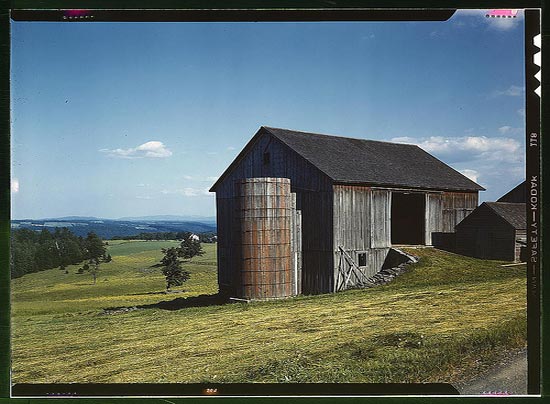
The photo sharing website Flickr.com and the Library of Congress in the United States have created a very interesting collaboration between a Web 2.0 business and a major cultural institution. The Commons, as it is known, invites the general public to mark up (they say “describe”) images from the collection of the Library of Congress and to discuss those images via the Flickr website.

In its first phase, the project offers visitors access to 3,115 images from the Library’s digital collection of more than 1 million historical images.

Catskills

As this image shows, the photographs selected for inclusion in the pilot project are of high quality. As nice as it is to have access to these images through the Flickr interface, that access is already provided by the Library, albeit in a very un-user friendly way. What will be of much more interest to historians and other researchers is the ways that visitors to the site have begun to engage in discussion of these images.

Back in 2006 I speculated that one day large institutions like the Library of Congress (LOC) would begin to make their collections available for public tagging and I wondered what that tagging would look like once it began. What I did not anticipate at the time was that rather than setting up their own interface to permit the public to begin tagging their digital collections, institutions like the LOC would simply take advantage of existing platforms like Flickr. (weiterlesen …)


Wechsle zu unserer Mobil-Seite